Goods Triple Match: Sorting 3D
Joymaster Puzzle Game StudioPuzzle
4.92.32K Reviews
- Version
- 1.2.7
- Installs
- 5.00M
- Age Rating
- Everyone
Screenshots
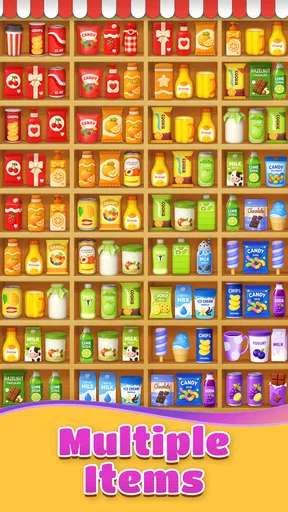
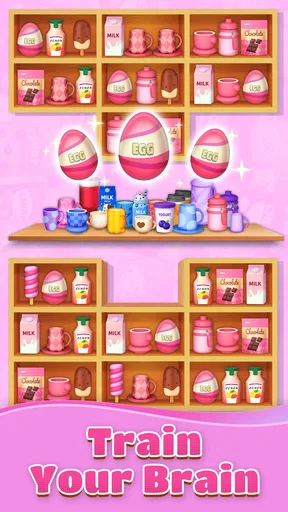
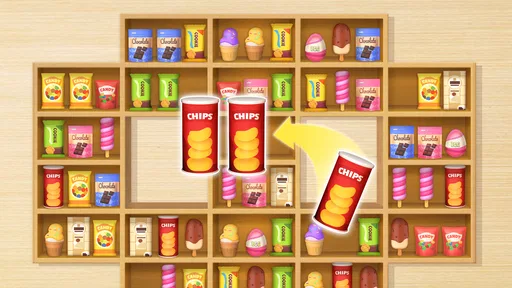
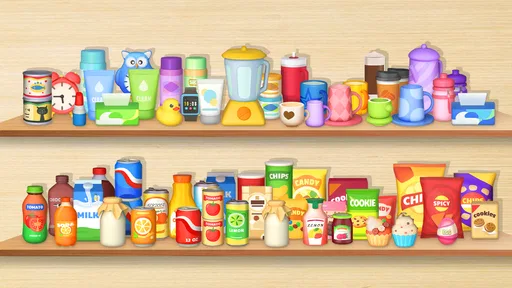
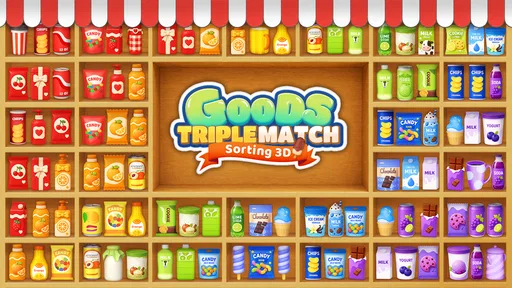
Our Review of Goods Triple Match: Sorting 3D
 Analysis by Appyee
Goods Triple Match: Sorting 3D is the kind of puzzle game I can understand within a minute and still find myself opening later the same day. The idea is simple: I look through a crowded three-dimensional collection of goods, identify matching sets, and sort them into triples. That familiar structure makes the first session welcoming, but the more important question is whether it remains enjoyable after the novelty wears off. In my experience, its strongest quality is the easy rhythm between scanning, choosing, and clearing space. Its biggest weakness is that this same rhythm can become repetitive if I want every puzzle to feel dramatically different.
Developed by Joymaster Puzzle Game Studio, this free puzzle title is aimed at casual players who enjoy visual matching without having to learn complicated rules. It is rated for Everyone, so the presentation is approachable for a broad audience. The game has attracted a 4.9 average from roughly 198 thousand ratings, with more than 5 million installs, which suggests that its straightforward format has found a large audience. I would recommend trying it if you like short sorting challenges, but I would not assume that a strong first impression automatically makes it a permanent favorite.
Why the first week feels so satisfying
The opening appeal comes from how quickly the game gives me something meaningful to do. There is no long explanation to memorize. I can focus on the objects in front of me, recognize three matching items, and make a decision. That low entry barrier matters on a phone, especially when I have only a few spare minutes. I do not need to prepare mentally for a long strategy session, and I can stop after a short attempt without feeling that I have abandoned a complicated campaign.
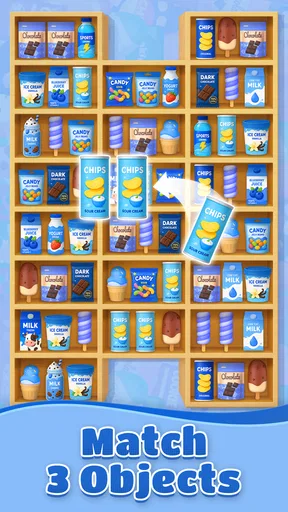
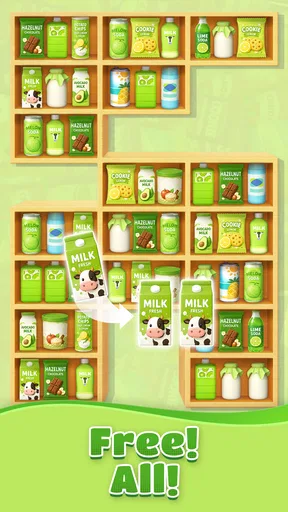
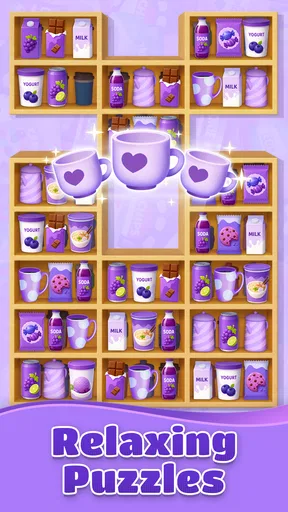
The three-dimensional presentation also gives the basic matching idea more visual texture than a flat grid. Objects can overlap, hide one another, or become easier to identify only after the front layer has been cleared. That creates a useful tension: a match is not just about noticing identical goods, but also about judging which item to remove first. I found myself looking beyond the obvious pair and thinking about what would become visible next. This is the first non-obvious strength of the game: good sorting decisions are often about preserving access, not simply spotting matches.
During the first week, that small layer of planning helps prevent the game from feeling like pure tapping. I can choose a visible triple immediately, or hold back one item because it may be needed to open a more useful area. The decision is easy to understand but still gives the player room to improve. When a board becomes crowded, the best move is not always the most visually satisfying one. Clearing a large object or a convenient group can expose the path to several future matches, while an attractive triple may leave awkward pieces blocking the next sequence.
I also like the way the format fits different everyday situations. I can play while waiting for an appointment, during a short break, or at the end of the day when I want something active but not demanding. A realistic use case is a ten-minute commute on public transport: I can begin a puzzle, make a few deliberate matches, and put the phone away when I arrive without needing to remember a complicated plot or coordinate with other players. That makes it more practical than puzzle games that require uninterrupted concentration for a long session.
The free entry point helps with that experimentation. I can install it and decide whether the visual sorting loop suits me without committing money first. The current version is 1.2.7, and the game runs on Android 7.0 or later, so it is not limited to only recent devices. That broader compatibility is useful for anyone using an older phone, although the experience can still depend on screen size and how clearly small objects are displayed.
What I learned to do differently
My most useful early habit was to stop treating every visible match as equally valuable. When several triples are available, I first look for the one that removes objects from a congested area or reveals pieces underneath. This is more effective than simply choosing the nearest group. I also try to keep a mental note of partial sets. If I have already seen two related objects, I avoid casually using one of them unless the move improves the board. That approach reduces the chance of creating a dead end through careless sorting.
A second practical tip is to scan the whole arrangement before making the first move. The game encourages immediate interaction because the matching rule is so clear, but a brief visual survey can expose a better order. I look for blocked corners, repeated shapes, and objects that are likely to become accessible after one removal. This makes the game feel less like a reflex exercise and more like a small spatial planning problem.
These habits are why the first-week experience can be more engaging than the store summary suggests. The basic premise is familiar, but the three-dimensional clutter gives each decision a little consequence. Still, I would describe the challenge as casual rather than deeply strategic. Players seeking elaborate logic systems, narrative progression, or a large variety of puzzle rules may find the core loop too narrow.
What remains useful after the first month
After the initial excitement fades, the game has to earn its place through convenience and repeatability. Goods Triple Match: Sorting 3D does reasonably well when I want a dependable, low-pressure activity. Its recurring value comes from the fact that I can return without relearning controls or remembering a storyline. The sorting action is immediately available, which is a real advantage for people who prefer a familiar mental warm-up over a game that constantly introduces new systems.
That convenience also creates the central trade-off. The game is easy to revisit because it asks little of me, but it may be difficult to stay invested if I need a strong sense of progression. In a month-to-month routine, I would use it as a filler game rather than my only puzzle game. It works alongside more varied alternatives: a traditional match-three title may offer stronger power-up combinations, a word puzzle may provide more language-based variety, and a logic game may reward deeper deduction. This title is better when I specifically want visual organization and quick decisions.
I can imagine two kinds of regular players. The first enjoys calming repetition and likes improving through better observation. For that person, the game can become a pleasant daily habit. The second wants every session to introduce a fresh rule, story beat, or strategic surprise. That player may enjoy the first few sessions but eventually move back to games with broader systems. Neither reaction is wrong; it depends on whether consistency feels comforting or predictable.
One way I would keep the experience useful is to give each session a small purpose. Instead of playing automatically until I lose interest, I might focus on clearing the most obstructed area first, making fewer impulsive moves, or finishing a short break with a clean board. This turns repetition into practice. It does not transform the game into a complex strategy title, but it gives the familiar loop a little structure and helps me notice whether my decisions are actually improving.
The purchase model is worth considering before making it a long-term habit. The game is free to start, with in-app purchases ranging from $1.99 to $99.99 per item. That wide span means I would be careful around optional spending, particularly if I am the kind of player who buys convenience items whenever a puzzle becomes frustrating. I would recommend deciding on a personal limit in advance rather than treating small purchases as harmless simply because the initial download costs nothing.
For someone asking whether the game is suitable for children, the Everyone rating makes it broadly accessible, but I would still pay attention to how a child responds to optional purchases and repeated play. The simple rules are easy to understand, yet easy access can also encourage longer sessions than intended. For adults, the same advice applies: its short-session design makes it convenient, but convenience can quietly turn into automatic checking.
How much maintenance the habit requires
Maintenance here is less about managing a complicated account and more about managing my own attention. The game does not require me to remember a large collection of rules, so returning after several days feels effortless. That is one of its best long-term qualities. I can leave it alone and come back without a penalty in my understanding. Many larger games demand regular engagement to keep up with events or systems; this one is easier to keep in the background.
At the same time, the low maintenance design can make the habit feel disposable. If I stop playing, I do not feel that I have lost a carefully built world or a developing skill tree. That is convenient, but it also weakens the reason to return. The game needs to win me back through the pleasure of sorting itself, not through a compelling long-term project. For me, that is enough for occasional use, but not always enough for a permanent place on the home screen.
I would maintain a healthier routine by using it in defined windows rather than opening it whenever I feel bored. A short session during a break makes the game feel like a deliberate choice. Opening it repeatedly without a clear stopping point makes the objects blur together and reduces the satisfaction of solving anything. This is the third practical insight I would pass on: the game benefits from a time boundary because its strongest feature is quick focus, not endless commitment.
Device comfort matters as well. Since the game relies on recognizing small three-dimensional goods, a cramped screen or dim display can make sorting less comfortable. I prefer playing when I can see the whole arrangement clearly rather than rushing through it one-handed in poor lighting. A larger screen may make the visual task easier, while a smaller phone keeps the game more portable. That is a genuine trade-off: portability supports frequent short sessions, but visibility can affect how enjoyable careful planning feels.
The current version, 1.2.7, is a useful detail for anyone deciding whether to try it now, particularly on a device that meets the Android 7.0 minimum. I would still keep expectations realistic about updates. A version number does not by itself guarantee a constant stream of meaningful changes, so I would judge the game primarily by whether the core sorting loop already appeals to me. If I need regular new mechanics to maintain interest, I would look for a puzzle title built around more substantial variation.
Where fatigue starts to appear
The main source of fatigue is repetition in the central action. Matching and sorting can be satisfying for a while, especially when the board is visually busy, but the same basic decision pattern can lose its freshness. Once I have learned to scan for blocked areas and preserve partial sets, some puzzles may feel more like routine execution than discovery. The game remains pleasant, but pleasant is not the same as absorbing.
Another possible friction point is the balance between clarity and clutter. The three-dimensional arrangement is what gives the game its identity, yet crowded objects can also make a board tiring to read. When several goods look similar or overlap heavily, I may spend more time searching than solving. That can be enjoyable when I am in a patient mood, but irritating when I only have a moment and want an immediately legible puzzle.
Players who dislike optional purchase pressure should also approach carefully. A free game with purchasable items can be perfectly usable without spending, but the presence of prices from $1.99 to $99.99 means I would not recommend it to someone who wants a completely purchase-free environment. I would also skip it if I know that frustration makes me spend impulsively. The right choice in that case is a paid puzzle with a clearly defined cost or a simpler free alternative with fewer temptations.
I would not choose this game as my main option for competitive play, rich storytelling, or serious brain-training claims. Its appeal is more modest and more honest: it gives me a visual sorting task that is easy to start. Compared with a traditional match-three game, it feels less focused on chaining effects and more focused on spatial access. Compared with a pure logic puzzle, it is faster to understand and less demanding, but it may not produce the same deep satisfaction after a difficult solve.
There is also a difference between relaxing repetition and empty repetition. The game works when I want a familiar activity that occupies my hands and eyes without requiring a major emotional investment. It works less well when I am hoping for a long-term challenge that keeps expanding. Recognizing that distinction prevents disappointment. I would not call the game a failure because it does not become a complex strategy experience; I would simply place it in the casual sorting niche where it performs best.
My long-term verdict
Goods Triple Match: Sorting 3D earns a trial because it makes visual matching immediately approachable and adds enough spatial clutter to give ordinary triples some thought. I like that I can play for a short period, return after a break, and understand what to do without preparation. The large audience, strong average rating, and free starting price make it easy to see why so many casual players have given it a chance.
Whether it earns lasting space depends on what I expect from a puzzle game. If I want a reliable break-time activity, I think it has a fair chance of becoming a regular choice. The most rewarding sessions come when I slow down, inspect the full arrangement, and prioritize moves that open blocked areas instead of grabbing the first obvious match. That small change in approach gives the sorting loop more substance than a quick glance at the premise would suggest.
If I want constant novelty, deep progression, competitive pressure, or a puzzle system that keeps changing, I would choose another category of game. The repeated sorting pattern can become tiring, and the optional purchase range makes self-control important for long-term use. I would also avoid making it the only game on my phone because its strengths are narrow: accessibility, visual organization, and short-session convenience.
My recommendation is therefore positive but measured. This is a good casual puzzle to keep available, not necessarily a game to build your entire routine around. I would install it for relaxed matching sessions, use a personal spending boundary, and play with a clear time limit. If the pleasure of turning a messy three-dimensional shelf into orderly triples still feels satisfying after several weeks, then it has earned its place. If the objects begin to feel interchangeable, moving to a word, logic, or more varied match-three game will probably provide better long-term value.
For me, that balanced result is the honest appeal of Joymaster Puzzle Game Studio’s offering. It does not need to be an ambitious all-purpose puzzle platform to be worthwhile. It simply needs to make a few spare minutes enjoyable, and it usually does. The lasting test is whether I return because I genuinely want to sort one more board, rather than because the game has become an automatic habit. On that measure, it is worth trying, with realistic expectations about repetition and optional spending.
Verdict
Strengths of Goods Triple Match: Sorting 3D
- Simple tap-and-drag controls are easy for beginners to learn.
- Bright 3D visuals make objects easy to identify during sorting.
- Short levels fit well into quick breaks or casual play sessions.
- Gradually increasing difficulty keeps the basic matching mechanic engaging.
- Offline play is convenient when you have no internet connection.
Limitations of Goods Triple Match: Sorting 3D
- Later levels can feel repetitive because the core gameplay rarely changes.
- Small objects may be difficult to distinguish on phones with compact screens.
- Mistakes and limited time can make some stages feel frustrating.
- Frequent ads may interrupt the flow between levels or after failed attempts.
- Progression may depend on boosters, which can encourage in-app purchases.
Other Releases by Joymaster Puzzle Game Studio
View All
3D Bolt Master®: Screw Master®
Casual4.8
Similar Picks in This Category
View All
Block Blast!
HungryStudio4.8

Braindom: Brain Games Test
Lahana Game Studio4.6

AMAZE!
CrazyLabs LTD4.6

Sudoku - Classic Sudoku Puzzle
Oakever Games4.7

Art Puzzle - Puzzle Games
Easybrain4.8

Amaze GO!
Oakever Games4.9
Frequently Asked Questions
What is Goods Triple Match: Sorting 3D?
Goods Triple Match: Sorting 3D is a casual puzzle game focused on organizing colorful 3D products on shelves. Your objective is to find and match three identical items, clear them from the board, and keep the shelves from becoming overcrowded. The gameplay is easy to understand, but later levels introduce tighter spaces, more objects, and time or move-related challenges that require careful planning.
How do you play Goods Triple Match: Sorting 3D?
To play, tap and arrange items so that three matching products are placed together and removed. You need to examine the available objects, plan which items to move first, and avoid filling the limited holding area with unrelated goods. Since some pieces may be hidden behind others, successful progress depends on organizing the shelves in the right order rather than simply tapping randomly.
Is Goods Triple Match: Sorting 3D free to download and play?
Goods Triple Match: Sorting 3D can generally be downloaded and played without an upfront purchase, making it accessible for casual players. However, the game may include advertisements, optional boosters, extra lives, or other in-app purchases. These purchases are not always necessary to enjoy the basic gameplay, but they can provide additional help when a level becomes difficult or when you want to continue playing without waiting.
Does the game require an internet connection?
Many of the core sorting and matching levels can usually be played offline, which is convenient when traveling or when a stable connection is unavailable. Nevertheless, an internet connection may be required for advertisements, cloud synchronization, special events, rewards, updates, or in-app purchase verification. Offline availability can vary by device version, so it is best to test the game after installation before relying on it without mobile data.
Is Goods Triple Match: Sorting 3D suitable for children and all types of players?
The game uses simple touch controls, colorful objects, and straightforward matching rules, so it is suitable for casual players and older children who enjoy relaxed puzzle challenges. Difficulty can increase as levels progress, and advertisements or optional purchases may be worth checking before allowing younger users to play. Parents should also review the store rating, privacy information, and device settings for purchases before installation.
Play our best games!


